Bankroll Management for Sports Bettors
Introduction
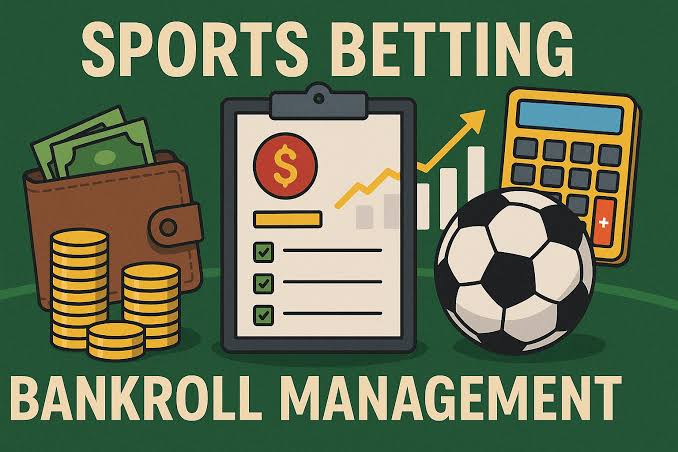
Bankroll management is one of the most important yet frequently overlooked aspects of sports betting. While much attention is given to picking winners and analysing matches, the way you manage your money ultimately determines whether you can sustain your betting activity over the long term.
Effective bankroll management is not about avoiding losses – that is impossible. It is about controlling the size of those losses, protecting your capital, and ensuring that a bad run does not wipe out your funds. It is a discipline that separates recreational bettors from those who treat betting as a serious pursuit.
This guide explains the core principles of bankroll management, from setting your initial bankroll to choosing a staking plan and maintaining emotional discipline. It is not a guarantee of profits, but it provides a structured approach to managing risk.
1. What Is a Bankroll?
Your bankroll is the total amount of money you have set aside specifically for betting. It should be completely separate from the money you use for everyday expenses, savings, or other financial obligations.
Think of it as a dedicated fund that you can afford to lose without affecting your lifestyle. If you cannot afford to lose it, it should not be part of your bankroll.
Having a defined bankroll allows you to measure your performance accurately, calculate appropriate stake sizes, and avoid the temptation to chase losses with money you cannot afford to risk.
2. Why Bankroll Management Matters
Even the most skilled bettor will experience losing streaks. Variance is an inherent part of sports betting. A sound bankroll management plan helps you survive those inevitable downturns.
Without proper management, a few unlucky results can lead to emotional decision-making, larger bets in an attempt to recover losses, and ultimately the depletion of your funds.
With a disciplined approach, you can withstand losing runs, maintain a clear mindset, and give your long-term edge – if you have one – the chance to materialise.
3. Setting Your Bankroll
The first step is to determine how much money you are willing to allocate to betting. This amount should be:
- Money you can afford to lose entirely without impacting your financial stability.
- Separate from your regular bank account and savings.
- An amount that allows you to place a reasonable number of bets without feeling restricted.
There is no universal correct figure. It depends on your personal circumstances. Some bettors start with a few hundred units, others with thousands. The key is that the amount is comfortable for you and does not create financial stress.
4. Unit Sizing: The Foundation of Bankroll Management
A "unit" is a standardised measure of your bet size. Expressing your stakes in units rather than currency makes it easier to track performance and adjust stakes as your bankroll changes.
For example, if your bankroll is £1,000 and you decide that 1 unit = 1% of your bankroll, then 1 unit = £10. If your bankroll grows to £1,200, 1 unit becomes £12.
There are several staking plans to consider:
Flat Betting
You bet the same amount (or same percentage) on every wager. For instance, always betting 1% of your bankroll. This is the simplest and most common approach, offering stability and reducing the impact of variance.
Percentage Betting
Your stake is always a fixed percentage of your current bankroll. This means your bets automatically decrease during a losing streak and increase during a winning streak. It is a dynamic form of flat betting that adjusts to your bankroll size.
Kelly Criterion
A more advanced mathematical formula that calculates the optimal stake based on your estimated edge and the odds available. It aims to maximise long-term growth but can be aggressive. Many bettors use a fractional Kelly (e.g., half-Kelly) to reduce volatility.
For most bettors, flat betting or percentage betting is recommended due to their simplicity and risk control.
5. Setting Limits: Stop-Loss and Win Goals
Discipline extends beyond stake size. Setting daily, weekly, or monthly limits can help prevent impulsive decisions.
- Stop-loss limit: A predetermined amount you are willing to lose in a session or period. Once reached, you stop betting for that period. This prevents chasing losses.
- Win goal: A target profit you aim for. Once achieved, you stop and bank the winnings. This helps lock in gains and avoid giving them back.
These limits are personal and should be realistic. They are tools to maintain control, not restrictions that make betting feel like a chore.
6. Keeping Records
You cannot manage what you do not measure. Keeping a detailed record of your bets is essential for bankroll management.
Record the following for each bet:
- Date and event
- Market and selection
- Odds taken
- Stake size
- Result
- Profit or loss
- Any notes on your reasoning
Over time, this data reveals your strengths, weaknesses, and whether your staking plan is appropriate. It also provides a factual basis for evaluating your performance rather than relying on memory.
7. Adjusting Your Bankroll
Your bankroll will fluctuate. When it grows significantly, you may choose to increase your unit size proportionally. When it shrinks, you should reduce your unit size to protect the remaining funds.
A common rule is to recalculate your unit size at regular intervals, such as weekly or monthly, based on your current bankroll. This ensures your stakes remain appropriate for your capital.
Some bettors also choose to withdraw a portion of profits periodically, treating it as income or adding it to savings. This is a personal decision, but it can help maintain discipline.
8. Emotional Discipline and Tilt
Emotions are the enemy of bankroll management. Tilt – the state of frustration or anger after a loss – can lead to reckless bets, larger stakes, and ignoring your plan.
Signs of tilt include:
- Betting on events you have not analysed.
- Increasing stakes to recover losses.
- Feeling anxious or angry while betting.
- Abandoning your staking plan.
Recognising these signs and taking a break is crucial. A clear mind is essential for rational decision-making.
Remember: betting is a marathon, not a sprint. One bad day does not define your overall results.
9. Common Bankroll Management Mistakes
- Betting more than you can afford: Using money needed for bills or savings.
- Not having a plan: Betting randomly without a staking strategy.
- Chasing losses: Increasing stakes after losses to recover quickly.
- Ignoring records: Not tracking results, leading to poor decision-making.
- Overbetting: Staking too much on a single bet, exposing your bankroll to unnecessary risk.
- Emotional betting: Letting frustration or excitement dictate stake sizes.
Avoiding these mistakes is fundamental to long-term survival.
10. Responsible Gambling
Bankroll management is a component of responsible gambling. Always bet within your means, never borrow money to bet, and never chase losses.
If gambling stops being enjoyable or starts causing financial, emotional, or relationship problems, seek help. Organisations such as GamCare and Gamblers Anonymous provide support.
18+ Only. Gamble Responsibly.
Final Thoughts
Bankroll management is not glamorous, but it is the backbone of sustainable sports betting. It protects you from the inevitable losing streaks and ensures that you can continue to enjoy betting without risking financial hardship.
By setting a dedicated bankroll, choosing a sensible staking plan, keeping records, and maintaining emotional discipline, you give yourself the best chance of long-term success – whatever that means for you.
Remember, there is no guaranteed way to win. But with proper bankroll management, you can at least ensure that you lose responsibly and stay in the game.